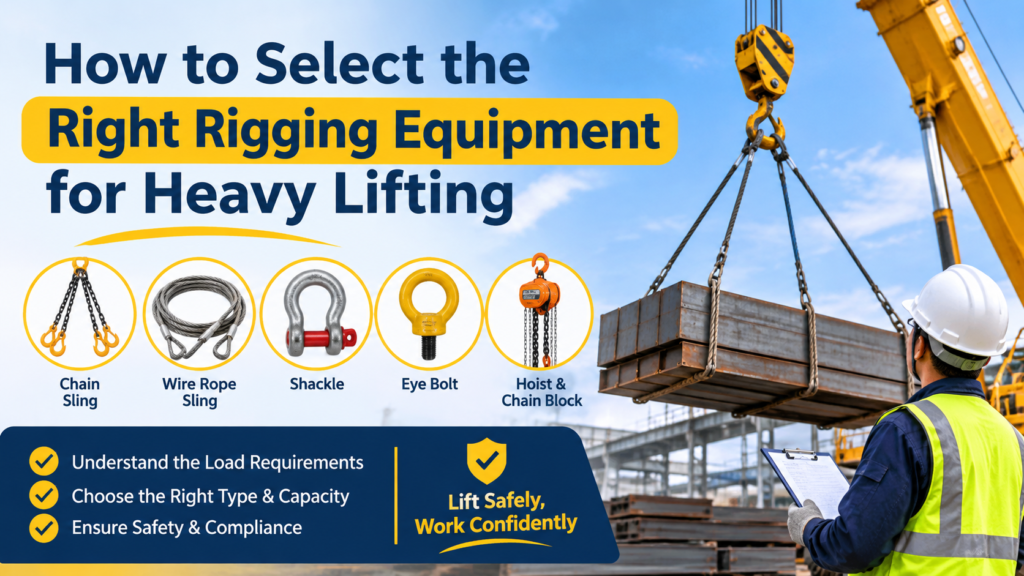
Heavy lifting is an essential operation in industries such as construction, manufacturing, steel production, infrastructure, shipping, and material handling. Moving heavy machinery, industrial components, and oversized materials requires the right lifting and rigging equipment to ensure operational efficiency and workplace safety.
Selecting suitable rigging equipment is not just about choosing products with high load capacity. It involves understanding the weight of the load, lifting arrangement, working environment, equipment compatibility, and safety requirements.
Using unsuitable or poor-quality rigging equipment can lead to equipment damage, load instability, operational delays, and serious workplace accidents.
In this guide, SVIBO Industries explains how to select the right rigging equipment for heavy lifting, the different types of rigging accessories available, and the important factors to consider before purchasing industrial lifting equipment.
What Is Rigging Equipment?
Rigging equipment refers to the tools and accessories used to connect, secure, lift, move, and position heavy loads with cranes, hoists, and other lifting machinery.
These accessories help distribute the load properly and provide a secure connection between the lifting machine and the material being handled.
Common rigging equipment includes:
- Wire Rope Slings
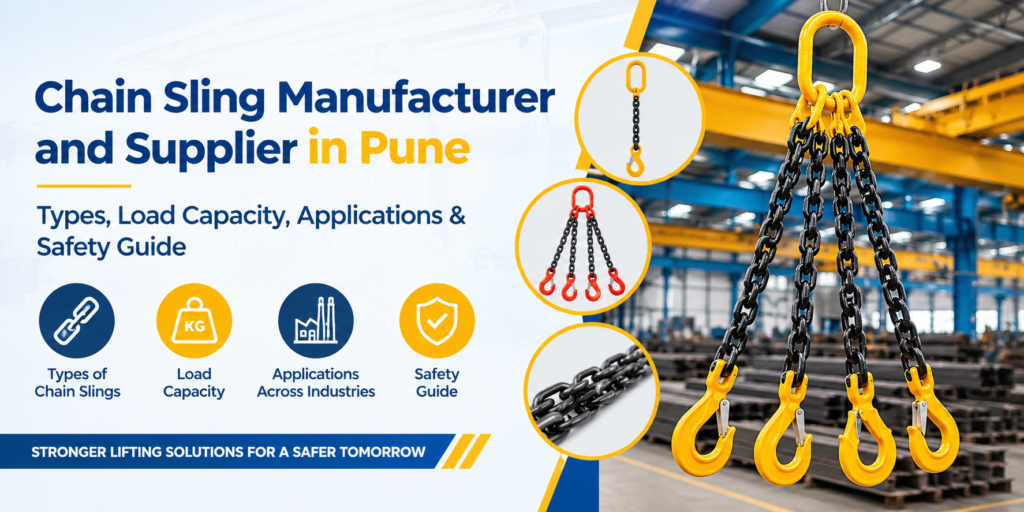
- Chain Slings
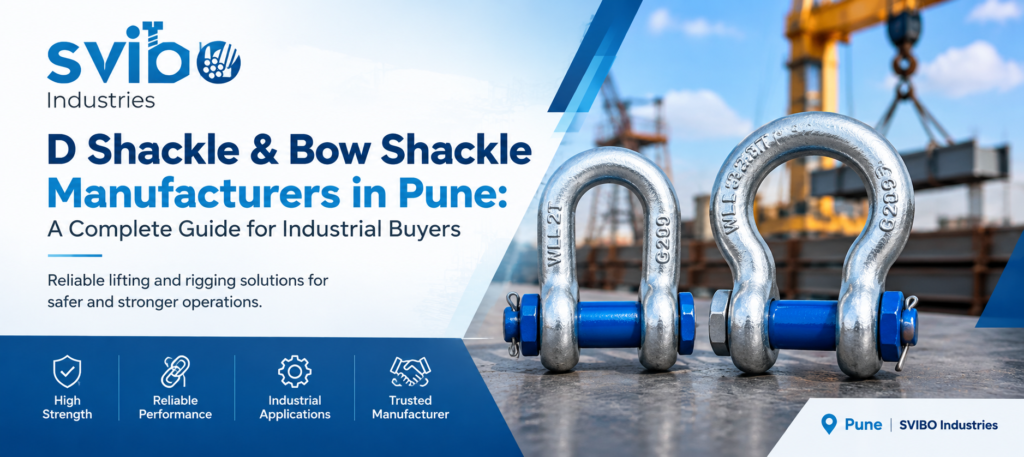
- D Shackles and Bow Shackles
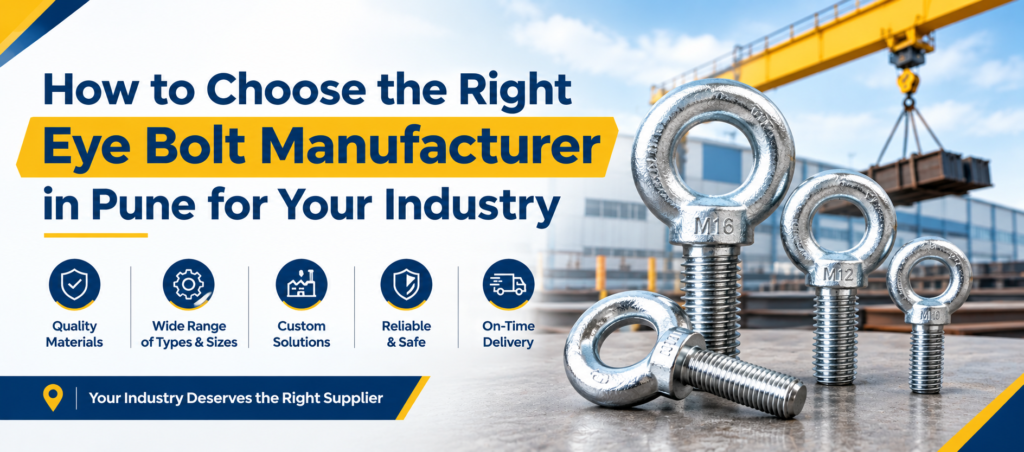
- Eye Bolts
- Turnbuckles
- Wire Rope Clamps
- Hooks and Master Links
- Pulley Blocks
- Manual Chain Hoists
- Industrial Lifting Accessories
Each product serves a specific purpose, and selecting the correct combination is essential for safe and efficient lifting operations.
8 Important Factors to Consider When Selecting Rigging Equipment for Heavy Lifting
1. Determine the Weight of the Load
The first step in selecting rigging equipment is determining the exact weight of the material or machinery to be lifted.
Different lifting accessories are designed for different load capacities. Choosing equipment with insufficient capacity can result in component failure and unsafe lifting conditions.
What to Consider:
- Total weight of the load.
- Weight of lifting attachments and accessories.
- Load distribution across sling legs.
- Centre of gravity of the material.
- Possibility of uneven load distribution.
Always select equipment with a suitable Working Load Limit (WLL) for the actual lifting arrangement. Never exceed the rated capacity of any component in the lifting system.
2. Choose the Right Type of Lifting Sling
Lifting slings connect the load to the lifting equipment and are available in different materials and configurations.
The most commonly used options include:
Wire Rope Slings
Wire rope slings are manufactured using multiple steel wires twisted together to form strands. They are suitable for various heavy-duty industrial lifting applications.
Benefits:
- Good strength and flexibility.
- Available in different diameters and configurations.
- Suitable for construction and manufacturing industries.
- Can be supplied with different end fittings.
Chain Slings
Chain slings are manufactured using high-strength alloy steel links and are commonly used in demanding industrial environments.
Benefits:
- Suitable for heavy-duty lifting operations.
- Available in different chain grades.
- Configurable with various hooks and connecting links.
- Certain designs are suitable for specified elevated-temperature applications.
How to Choose?
Choose wire rope slings when flexibility and versatile lifting arrangements are important. Consider chain slings for demanding applications requiring robust lifting accessories. Always verify the rated capacity and operating conditions.
3. Understand the Working Load Limit (WLL)
Working Load Limit is one of the most important specifications when selecting rigging equipment.
It represents the maximum load that an accessory is rated to support under specified conditions.
For example, a shackle marked with a WLL of 3.25 tonnes should only be used within its rated limits and under the conditions specified by its manufacturer.
Important WLL Considerations:
- Check the identification markings on every lifting accessory.
- Consider sling angles and the resulting tension in each sling leg.
- Account for load distribution.
- Ensure all connecting components have suitable ratings.
- Follow manufacturer instructions and applicable lifting standards.
Remember that the rated capacity of the complete lifting arrangement is governed by its weakest component and the actual configuration.
4. Select the Correct Shackles and Connecting Accessories
Shackles are essential rigging components used to connect lifting slings, hooks, wire ropes, and other lifting accessories.
Two commonly used types are:
D Shackle:
D shackles are generally used for straight-line lifting and connecting applications where side loading can be avoided.
Bow Shackle:
Bow shackles have a wider bow-shaped body, providing more room for connecting multiple sling legs or accessories in suitable arrangements.
Factors to Consider:
- Required Working Load Limit.
- Shackle material and grade.
- Pin type and compatibility.
- Load direction and possible side loading.
- Manufacturer specifications and markings.
Using the correct shackle helps create a secure connection between different rigging components.
5. Consider the Working Environment
The operating environment has a significant impact on rigging equipment selection and service life.
Different industrial environments create different challenges, including moisture, corrosion, high temperatures, dust, chemicals, and abrasive surfaces.
Environmental Factors to Evaluate:
- High Temperatures: Select equipment specifically rated for the operating temperature.
- Moisture and Humidity: Consider corrosion-resistant materials and suitable protective measures.
- Chemical Exposure: Check material compatibility with the chemicals present.
- Rough Surfaces: Use appropriate sling protection to prevent abrasion and cutting.
- Outdoor Operations: Consider weather exposure, storage conditions, and corrosion protection.
Selecting equipment based on the working environment helps maintain its performance and reliability.
6. Check Equipment Compatibility
Every component in a lifting arrangement must work together correctly.
Using incompatible hooks, shackles, slings, eye bolts, or lifting attachments can create unsafe loading conditions.
Before selecting rigging equipment, check:
- Compatibility between hooks and lifting slings.
- Shackle dimensions and pin compatibility.
- Eye bolt design and loading direction.
- Chain grade and connecting component ratings.
- Suitable attachment points on the load.
- Compatibility with the crane or hoist.
All lifting components should be appropriately rated and suitable for the intended configuration.
7. Evaluate Durability and Material Quality
Heavy lifting equipment is frequently exposed to demanding working conditions. Therefore, material quality and manufacturing standards are important considerations.
Before purchasing rigging accessories, evaluate:
- Material composition and grade.
- Manufacturing quality.
- Surface finish and corrosion protection.
- Product identification and traceability.
- Applicable testing and inspection documentation.
- Compliance with relevant standards.
Choosing quality rigging equipment can help reduce premature wear, unexpected failures, and operational interruptions.
8. Consider Maintenance and Inspection Requirements
Even high-quality lifting equipment requires regular inspection and proper maintenance.
Damaged or worn rigging accessories can compromise lifting safety and should never be ignored.
Important Inspection Points:
| Equipment | Inspection Requirements |
| Wire Rope Sling | Broken wires, kinks, corrosion and deformation |
| Chain Sling | Cracks, wear, elongation and damaged links |
| D Shackle | Bent body, damaged pin and thread condition |
| Bow Shackle | Cracks, deformation and pin condition |
| Eye Bolt | Thread damage, cracks and deformation |
| Turnbuckle | Damaged threads, bending and corrosion |
| Wire Rope Clamp | Body damage, thread condition and correct installation |
| Lifting Hook | Cracks, bending and safety latch condition |
Perform visual inspections before use and arrange periodic detailed inspections according to applicable standards, manufacturer recommendations, and operating conditions.
Different Types of Rigging Equipment and Their Applications
Understanding the purpose of different rigging accessories makes equipment selection easier.
| Rigging Equipment | Main Application |
| Wire Rope Sling | Lifting heavy machinery and industrial materials |
| Chain Sling | Heavy-duty industrial lifting |
| D Shackle | Connecting slings and lifting accessories |
| Bow Shackle | Connecting multiple rigging components |
| Eye Bolt | Providing lifting and anchoring points |
| Turnbuckle | Adjusting tension in rigging arrangements |
| Wire Rope Clamp | Securing wire rope terminations in approved applications |
| Chain Pulley Block | Manually lifting and lowering heavy loads |
| Pulley Block | Changing lifting direction or assisting mechanical advantage |
| Industrial Hooks | Connecting loads to lifting equipment |
The exact application and permitted loading method should always follow the manufacturer’s instructions and relevant safety requirements.
Common Mistakes to Avoid When Selecting Rigging Equipment
Selecting unsuitable rigging accessories can create serious risks during lifting operations.
Here are some common mistakes businesses should avoid:
- Ignoring Load Capacity: Never select equipment without checking the actual load weight and WLL.
- Using Damaged Accessories: Avoid using slings, shackles, hooks, or chains showing visible damage.
- Incorrect Sling Angles: Improper sling angles can significantly increase the tension in individual sling legs.
- Mixing Incompatible Components: Ensure all accessories are compatible and appropriately rated.
- Ignoring Environmental Conditions: Consider temperature, moisture, chemicals, and abrasive surfaces.
- Overlooking Inspection: Regularly inspect all lifting accessories.
- Improper Load Balancing: Ensure the centre of gravity is considered before lifting.
- Buying Without Specifications: Check product details, ratings, markings, and supporting documentation before purchasing.
Safety Tips for Heavy Lifting Operations
Following proper safety procedures helps prevent accidents and improves lifting efficiency.
- Always inspect lifting and rigging equipment before use.
- Never exceed the rated Working Load Limit.
- Ensure the load is balanced and properly secured.
- Avoid sudden movements and shock loading.
- Never stand or walk beneath a suspended load.
- Keep personnel away from the lifting area.
- Use suitable edge protection where required.
- Ensure lifting equipment is operated by trained personnel.
- Follow manufacturer instructions and applicable safety standards.
- Remove defective equipment from service immediately.
Proper planning and safe operating practices are essential for every heavy lifting operation.
How to Choose a Reliable Lifting and Rigging Equipment Manufacturer in India?
Selecting the right manufacturer or supplier is as important as selecting the correct equipment. Businesses should work with suppliers who understand industrial lifting requirements and can provide suitable product information.
Consider these factors before making a purchase:
1. Product Range: Look for suppliers offering wire rope slings, chain slings, shackles, hooks, turnbuckles, eye bolts, and other industrial lifting accessories.
2. Quality Assurance: Check manufacturing quality, material specifications, and product inspection documentation.
3. Capacity Options: Ensure the supplier can guide you in selecting suitable load capacities and configurations.
4. Industry Experience: Consider experience in industrial lifting, material handling, and rigging applications.
5. Technical Guidance: Choose a supplier who can help you understand product specifications and application requirements.
6. Product Availability: Access to compatible lifting accessories and replacement components can support uninterrupted operations.
SVIBO Industries focuses on industrial lifting and rigging equipment solutions, supporting businesses with products for different material-handling requirements.
Why Choose SVIBO Industries for Lifting and Rigging Equipment?
SVIBO Industries understands the importance of reliable lifting and rigging accessories across industrial applications. Selecting the correct equipment is essential for safe material handling, operational efficiency, and long-term performance.
From wire rope-related accessories and lifting components to industrial rigging solutions, businesses should prioritize product quality, correct specifications, and application suitability when selecting equipment.
SVIBO Industries aims to support industrial requirements through its range of lifting and rigging equipment solutions.
Whether you are involved in construction, manufacturing, engineering, or heavy material handling, selecting the right lifting accessories is an important step towards improving operational safety.
Conclusion
Selecting the right rigging equipment for heavy lifting requires careful consideration of load capacity, sling type, Working Load Limit, working environment, component compatibility, material quality, and maintenance requirements.
Wire rope slings, chain slings, shackles, eye bolts, turnbuckles, and other rigging accessories each serve specific purposes in industrial lifting operations. Choosing suitable products and combining them correctly helps improve lifting efficiency and reduce operational risks.
Businesses should always prioritize quality, proper inspection, and safe operating procedures when purchasing industrial lifting accessories.
SVIBO Industries understands the importance of dependable lifting and rigging equipment solutions for modern industries. Selecting suitable products for your application can help support safer and more efficient heavy lifting operations.
Frequently Asked Questions (FAQs)
1. What is the most important factor when selecting rigging equipment for heavy lifting?
The most important factor is the Working Load Limit (WLL). The equipment must have sufficient rated capacity for the actual load, lifting configuration, and operating conditions.
2. What are the most commonly used rigging equipment types?
Common types include wire rope slings, chain slings, D shackles, bow shackles, eye bolts, turnbuckles, wire rope clamps, lifting hooks, and pulley blocks.
3. What is the difference between a wire rope sling and a chain sling?
Wire rope slings are manufactured using steel wire strands and generally offer greater flexibility. Chain slings use high-strength alloy steel links and are suitable for demanding industrial lifting applications.
4. How do I calculate the required capacity of a lifting sling?
Start with the total load weight and consider the number of sling legs, sling angles, load distribution, and lifting configuration. Follow the manufacturer’s rated capacity charts and consult a competent lifting professional when necessary.
5. Why is the Working Load Limit important in rigging equipment?
WLL indicates the maximum load an accessory is rated to handle under specified conditions. Staying within the rated capacity helps reduce the risk of equipment failure.
6. How often should rigging equipment be inspected?
Equipment should be visually inspected before each use and undergo periodic detailed inspections based on applicable standards, manufacturer recommendations, and operating conditions.
7. Which rigging equipment is suitable for construction industries?
Wire rope slings, chain slings, shackles, lifting hooks, and turnbuckles are commonly used in construction. The correct selection depends on the load, lifting arrangement, and site conditions.
8. Where can I find a reliable Lifting and Rigging Equipment Manufacturer in India?
Look for a manufacturer or supplier offering suitable product specifications, quality assurance, inspection documentation, and technical support. SVIBO Industries provides industrial lifting and rigging equipment solutions for various material-handling requirements.