A chain pulley block is an essential material-handling and lifting device widely used in manufacturing plants, warehouses, construction sites, workshops, and industrial facilities. It helps lift and lower heavy loads safely with controlled manual operation. However, like any mechanical lifting equipment, chain pulley blocks can develop problems due to regular usage, improper handling, inadequate maintenance, or excessive loading.
Understanding common chain pulley block problems and taking preventive measures can improve equipment performance, reduce downtime, and enhance workplace safety. Choosing a reliable Chain Pulley Block Supplier in India is equally important to ensure product quality, durability, and dependable lifting performance.
In this blog, SVIBO Industries explains the most common chain pulley block problems, their causes, and practical ways to prevent them.
What Is a Chain Pulley Block?
A chain pulley block, also known as a manual chain hoist, is a mechanical lifting device designed to raise and lower heavy materials using a hand-operated chain. It generally consists of a hand chain, load chain, lifting hook, gears, brake mechanism, and housing.
The equipment works through a gear reduction mechanism that allows operators to lift heavy loads with comparatively less manual effort.
Chain pulley blocks are commonly used in:
- Manufacturing and engineering industries
- Warehouses and storage facilities
- Construction and infrastructure projects
- Automobile and fabrication workshops
- Steel plants and material-handling units
- Industrial maintenance operations
Selecting the correct lifting capacity and maintaining the equipment properly are essential for safe and efficient operation.
7 Common Chain Pulley Block Problems and How to Prevent Them
1. Chain Jamming or Difficult Chain Movement
One of the most common chain pulley block problems is difficulty in pulling the hand chain or movement of the load chain. This issue can interrupt lifting operations and increase the effort required from operators.
Common Causes:
- Dirt, dust, and debris accumulation
- Improper chain alignment
- Rust or corrosion on the chain
- Damaged or worn internal gears
- Lack of regular lubrication
Prevention Tips:
- Clean the chain and moving components regularly.
- Apply manufacturer-recommended lubrication where required.
- Inspect the chain for twists, knots, and damage.
- Ensure the load chain is properly aligned.
- Avoid operating the equipment when chain movement becomes restricted.
2. Load Chain Wear and Elongation
The load chain carries the entire lifting load, making it one of the most critical components of a chain pulley block. Continuous usage, overloading, and poor maintenance can cause chain wear, elongation, or deformation.
Common Causes:
- Frequent lifting beyond the rated capacity
- Excessive friction between chain links
- Improper lubrication
- Corrosion due to moisture exposure
- Continuous operation under harsh conditions
Prevention Tips:
- Inspect load chains regularly for wear and deformation.
- Check chain dimensions according to manufacturer specifications.
- Never exceed the working load limit (WLL).
- Replace damaged or excessively worn chains with approved components.
- Keep the equipment clean and properly maintained.
Important: Never attempt to repair a damaged load chain through welding, heating, or unauthorized modifications. Replace it according to the manufacturer’s recommendations.
3. Brake Failure or Load Slippage
The braking mechanism is responsible for holding the suspended load securely when the operator stops pulling the hand chain. Brake failure can cause uncontrolled load movement and serious workplace accidents.
Common Causes:
- Worn or damaged brake components
- Oil or grease contamination on friction surfaces
- Incorrect brake adjustment
- Continuous operation without inspection
- Internal mechanical damage
Prevention Tips:
- Inspect the brake mechanism at recommended intervals.
- Check whether the brake holds the load properly during authorized testing.
- Keep friction surfaces free from contamination.
- Follow manufacturer guidelines for brake adjustment.
- Remove the equipment from service if load slippage is observed.
Brake-related issues should always be inspected and corrected by qualified personnel before the equipment is used again.
4. Lifting Hook Damage or Deformation
The lifting hook connects the chain pulley block to the load and plays an important role in safe lifting operations. A bent, cracked, or damaged hook can compromise load security.
Common Causes:
- Overloading beyond rated capacity
- Side loading or improper load positioning
- Incorrect lifting attachments
- Impact damage
- Lack of regular inspection
Prevention Tips:
- Inspect hooks for cracks, bending, and excessive wear.
- Check safety latches for proper operation.
- Ensure the load is properly seated in the hook.
- Avoid side pulling and shock loading.
- Replace hooks that do not meet manufacturer specifications.
Never straighten or weld a deformed lifting hook to restore its shape.
5. Excessive Noise During Operation
Unusual grinding, clicking, or metallic sounds during lifting operations may indicate internal mechanical problems. Ignoring these warning signs can lead to equipment failure.
Common Causes:
- Worn gears or bearings
- Insufficient lubrication
- Loose internal components
- Misaligned chain mechanisms
- Foreign particles inside the housing
Prevention Tips:
- Listen for unusual sounds during operation.
- Schedule periodic mechanical inspections.
- Use manufacturer-approved lubricants.
- Check internal components for excessive wear.
- Get unusual noises investigated by trained technicians.
Early identification of mechanical noise can help prevent expensive repairs and unexpected downtime.
6. Chain Twisting or Improper Alignment
A twisted or misaligned load chain can affect lifting performance and place additional stress on the equipment. It may also create unsafe lifting conditions.
Common Causes:
- Improper chain installation
- Incorrect reeving in multi-fall hoists
- Twisted chain links
- Improper handling during operation
- Poor storage practices
Prevention Tips:
- Check chain alignment before starting lifting operations.
- Ensure the chain is installed according to manufacturer instructions.
- Avoid pulling the chain at an angle.
- Do not force a twisted chain through the lifting mechanism.
- Arrange professional inspection if chain alignment problems continue.
7. Overloading and Reduced Lifting Performance
Using a chain pulley block beyond its rated capacity is one of the most dangerous operating mistakes. Overloading can damage the gears, load chain, hooks, and braking mechanism.
Common Causes:
- Incorrect estimation of load weight
- Selecting equipment with insufficient capacity
- Ignoring the rated working load limit
- Sudden or shock loading
- Improper lifting practices
Prevention Tips:
- Select a chain pulley block based on the actual load requirements.
- Check the equipment’s rated capacity before operation.
- Never exceed the manufacturer’s specified working load limit.
- Avoid sudden jerks and shock loading.
- Train operators in safe lifting procedures.
Chain Pulley Block Maintenance Checklist
Regular inspection and preventive maintenance help improve equipment reliability and reduce unexpected breakdowns.
| Component | What to Check |
| Load Chain | Wear, elongation, corrosion and deformation |
| Hand Chain | Smooth movement and proper alignment |
| Lifting Hook | Cracks, bending and safety latch condition |
| Brake Mechanism | Proper load holding and brake condition |
| Gears | Abnormal noise, wear and damage |
| Housing | Cracks, loose components and physical damage |
| Overall Operation | Smooth lifting and lowering performance |
Maintenance recommendations:
- Perform a visual inspection before each use.
- Follow the manufacturer’s recommended inspection and maintenance schedule.
- Maintain inspection and repair records.
- Arrange periodic inspections by competent personnel.
- Remove defective equipment from service until it has been properly assessed and repaired.
How to Choose a Reliable Chain Pulley Block Supplier in India?
Choosing the right supplier is essential for purchasing dependable lifting equipment that meets your industrial requirements. A trusted supplier can help you select suitable equipment based on lifting capacity, application, operating conditions, and safety requirements.
Consider the following factors before selecting a supplier:
1. Product Quality: Look for durable chain pulley blocks manufactured using quality materials and reliable mechanical components.
2. Lifting Capacity Options: Choose a supplier offering suitable capacity options for different industrial lifting applications.
3. Safety and Quality Standards: Check product specifications, applicable standards, inspection documentation, and manufacturer recommendations.
4. Technical Support: Prefer suppliers who can guide you in selecting, operating, and maintaining lifting equipment.
5. Product Availability: Reliable product availability and access to compatible replacement components can help reduce operational downtime.
6. Industry Experience: Consider suppliers with relevant experience in industrial lifting and material-handling equipment.
SVIBO Industries focuses on industrial lifting and rigging equipment solutions, helping businesses understand the importance of selecting suitable products for safe and efficient material handling.
Why Proper Chain Pulley Block Maintenance Matters
Preventive maintenance is not just about keeping lifting equipment operational. It is an important part of workplace safety and industrial productivity.
Some major benefits include:
- Improved Equipment Life: Regular maintenance helps reduce premature component wear.
- Enhanced Workplace Safety: Identifying damaged components helps prevent lifting-related hazards.
- Reduced Downtime: Early problem detection reduces unexpected equipment breakdowns.
- Better Operational Efficiency: Smooth chain movement and reliable braking support efficient lifting operations.
- Lower Maintenance Costs: Preventive measures can reduce major repair and replacement expenses.
Conclusion
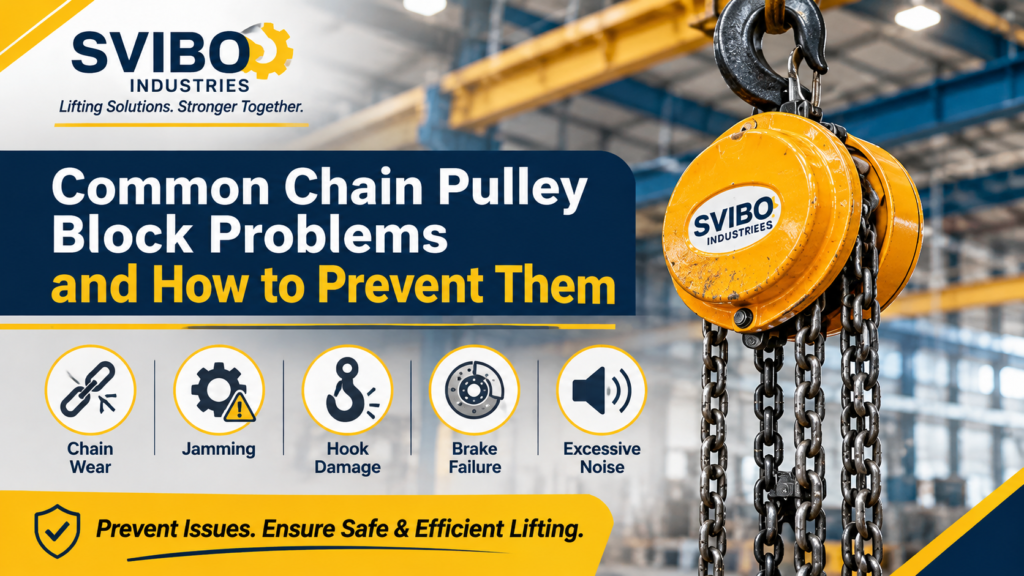
Chain pulley blocks play an important role in industrial lifting and material-handling operations. Problems such as chain jamming, load chain wear, brake failure, hook deformation, unusual noise, and overloading can affect equipment performance and workplace safety.
Regular inspection, proper lubrication, correct load selection, and timely replacement of damaged components are essential for maintaining reliable lifting operations.
Choosing an experienced Chain Pulley Block Supplier in India also helps businesses make informed purchasing decisions and select equipment suitable for their applications.
SVIBO Industries understands the importance of dependable lifting and rigging solutions for industrial operations. By focusing on proper equipment selection, inspection, and maintenance practices, businesses can improve lifting efficiency and support safer material-handling environments.
Frequently Asked Questions (FAQs)
1. What are the most common problems in a chain pulley block?
Common problems include chain jamming, load chain wear, brake failure, hook deformation, unusual operating noise, chain twisting, and overloading.
2. How often should a chain pulley block be inspected?
A chain pulley block should undergo visual inspection before each use, along with periodic detailed inspections based on manufacturer recommendations, usage frequency, and operating conditions.
3. Why does a chain pulley block become difficult to operate?
It may become difficult to operate due to dirt accumulation, inadequate lubrication, chain misalignment, worn gears, or damaged internal components.
4. What causes chain pulley block brake failure?
Brake failure may occur due to worn friction components, contamination, improper adjustment, or mechanical damage. The equipment should be removed from service until the issue is resolved.
5. How can I increase the lifespan of a chain pulley block?
Regular cleaning, proper lubrication, load capacity management, timely inspections, correct storage, and replacement of worn components can help extend equipment life.
6. How do I choose the right chain pulley block capacity?
Determine the maximum load weight, lifting height, frequency of use, and operating conditions. Select equipment with a rated capacity suitable for the application and follow manufacturer recommendations.
7. Where can I find a reliable Chain Pulley Block Supplier in India?
Look for a supplier with relevant industrial equipment experience, reliable product specifications, suitable capacity options, and technical support. SVIBO Industries offers industrial lifting and rigging equipment solutions.