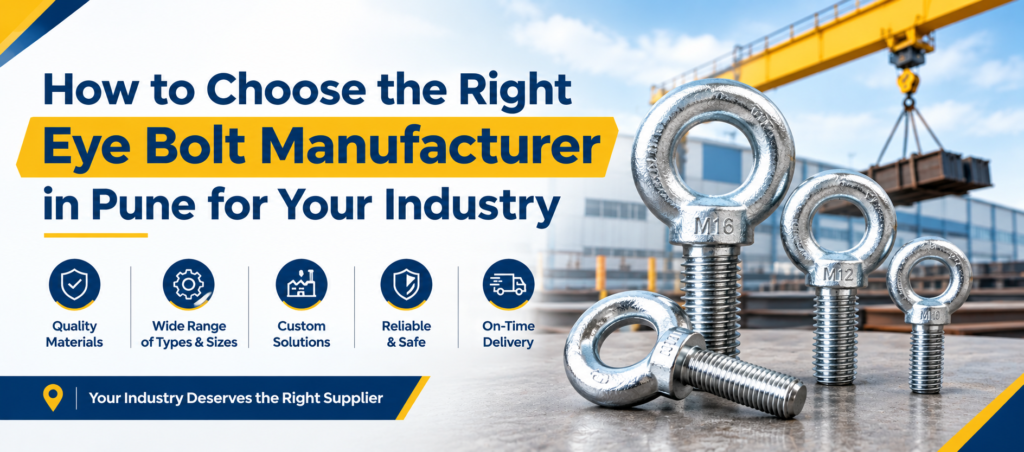
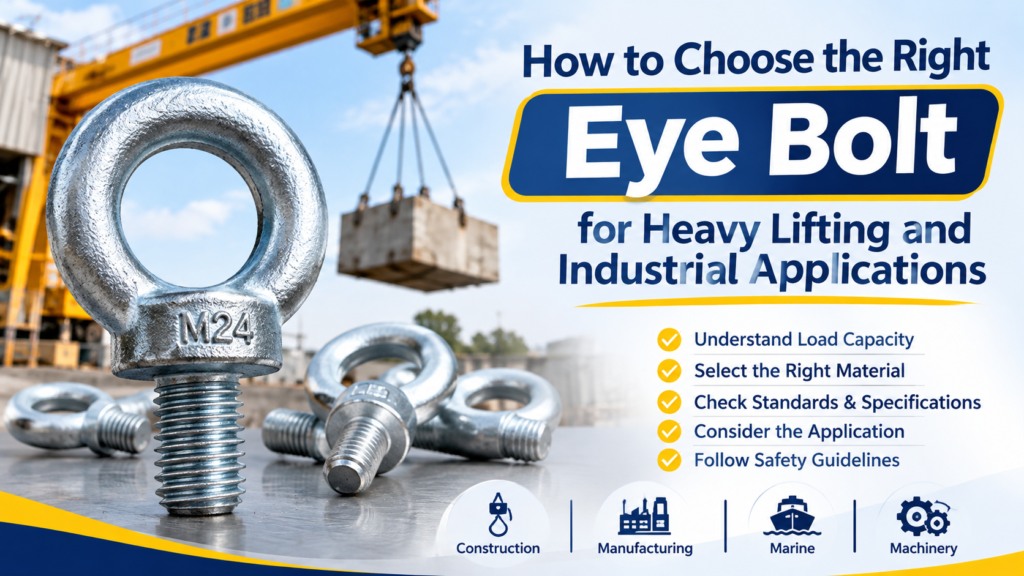
In any lifting operation, the smallest component often carries the biggest responsibility. An eye bolt looks simple, but it is the link between your load and your lifting gear. A wrong choice can mean damaged equipment, costly downtime, or serious injury. Whether you run a fabrication shop, a construction site, a power plant or a heavy machinery workshop, selecting the right eye bolt is a safety decision, not just a purchasing one.
As an experienced Eye Bolt Supplier in India, SVIBO Industries works with buyers across sectors who ask the same question: which eye bolt is right for my application? This guide walks you through what matters most.
1. Understand What an Eye Bolt Does
An eye bolt is a threaded fastener with a looped head (the “eye”) that lets you attach a sling, shackle, hook or rope to a load. It is used for lifting, pulling, anchoring and securing equipment, machinery and structures. Not every eye bolt is designed for lifting, though, so always confirm that the product is rated for the job.
2. Know the Main Types of Industrial Eye Bolts
The market offers several designs, and each suits different conditions:
- Collared (shoulder) eye bolts: Have a flange under the eye that sits flush against the load surface. They are the standard choice for lifting and can handle some angular loading when used correctly.
- Plain (uncollared) eye bolts: Suitable only for straight, in-line vertical pulls. They are not meant for angular lifts.
- Eye bolts with link (swivel type): Rotate under load, which helps when the load shifts or turns.
- Dynamo eye bolts and eye nuts: Used where the load already has a threaded hole or a through-bore, such as motors and gearboxes.
For most heavy lifting, collared Industrial Eye Bolts are the safer and more versatile option.
3. Why Forged Eye Bolts Are the Preferred Choice
Manufacturing method has a direct effect on strength. Forged Eye Bolts are shaped under high pressure, which aligns the grain structure of the steel along the contour of the bolt. This gives better fatigue resistance, toughness and reliability under shock or repeated loading compared with cast or bent-wire alternatives.
When the application involves heavy loads, vibration or frequent use, forging is the standard to look for. Properly made Heavy Duty Eye Bolts are typically drop forged from quality carbon or alloy steel, then heat treated for consistent mechanical properties.
4. Check the Working Load Limit (WLL)
The working load limit is the maximum load the eye bolt is rated to carry in normal service. Never guess, and never exceed it. Keep these points in mind:
- Choose a WLL comfortably above the actual weight of your load, including rigging weight.
- Remember that the rating applies to a straight, in-line pull. As the sling angle increases away from the bolt axis, the permitted load drops sharply, in some cases to a fraction of the rated value.
- Follow the manufacturer’s derating chart for angular and multi-leg lifts.
- Look for clear markings such as size and WLL, and request test or material certificates where required.
5. Match the Material to the Environment
- Carbon steel (zinc plated or self-colour): Cost-effective and strong, ideal for general industrial lifting.
- Alloy steel: Higher strength for demanding heavy lifting.
- Stainless steel (such as 304 or 316): Best for corrosive settings like marine, chemical, food processing and coastal installations, though it generally carries lower ratings than alloy steel for the same size.
If your site involves moisture, chemicals or outdoor exposure, corrosion protection is as important as strength.
6. Get the Thread and Size Right
A lifting eye bolt is only as good as its connection to the load. Make sure that:
- The thread type and size (metric or UNC) match the tapped hole exactly.
- The thread engagement length is sufficient, as recommended for the bolt’s grade and size.
- The collar sits fully flat against the surface, with no gap and no washers or spacers unless the design allows them.
- The eye is large enough for your shackle or hook to move freely without binding.
A shallow or mismatched thread is one of the most common causes of lifting failures.
7. Follow Recognised Standards
Standards help make sure an eye bolt has been designed, forged and tested to a known benchmark. Common references in Indian industry include DIN 580 for forged lifting eye bolts and ASME B18.15 for forged eye bolts. Buying from a supplier who can state which standard a product follows makes compliance and inspection far easier.
8. Inspect Before Every Use
Even the best eye bolt can wear out or get damaged. Before each lift, check for:
- Bending, stretching or deformation of the shank or eye
- Cracks, nicks or gouges
- Damaged or worn threads
- Heavy corrosion or pitting
- Unreadable load markings
If you see any of these, take the eye bolt out of service immediately. Do not weld, heat or modify a lifting eye bolt.
9. Best Practices for Safe Lifting
- Always tighten the eye bolt fully so the collar is in firm contact with the load.
- Keep the pull as close to the axis of the bolt as possible.
- Use shackles or hooks that fit the eye correctly, and avoid sharp angles.
- Avoid shock loading and sudden jerks.
- Train riggers and operators to read load charts and derating tables.
10. Choose a Reliable Supplier
The right supplier matters as much as the right product. When evaluating an eye bolt manufacturer or distributor, look for:
- Consistent forging quality and traceable materials
- A wide range of sizes, grades and finishes
- Clear documentation and testing support
- Technical guidance to help you select the correct product
- Dependable delivery for both bulk and project orders
Final Thoughts
Choosing the right eye bolt comes down to a few essentials: the type of lift, the working load limit, the material for your environment, the correct thread and size, and quality that meets recognised standards. Investing in properly forged, certified products protects your people, your equipment and your operations.
At SVIBO Industries, we supply Industrial Eye Bolts, Heavy Duty Eye Bolts and Forged Eye Bolts built for demanding lifting and rigging applications. As a trusted Eye Bolt Supplier in India, we help buyers choose the right product for their load, environment and budget.
Need help selecting the right eye bolt? Contact SVIBO Industries today for specifications, pricing and bulk enquiries.