Introduction
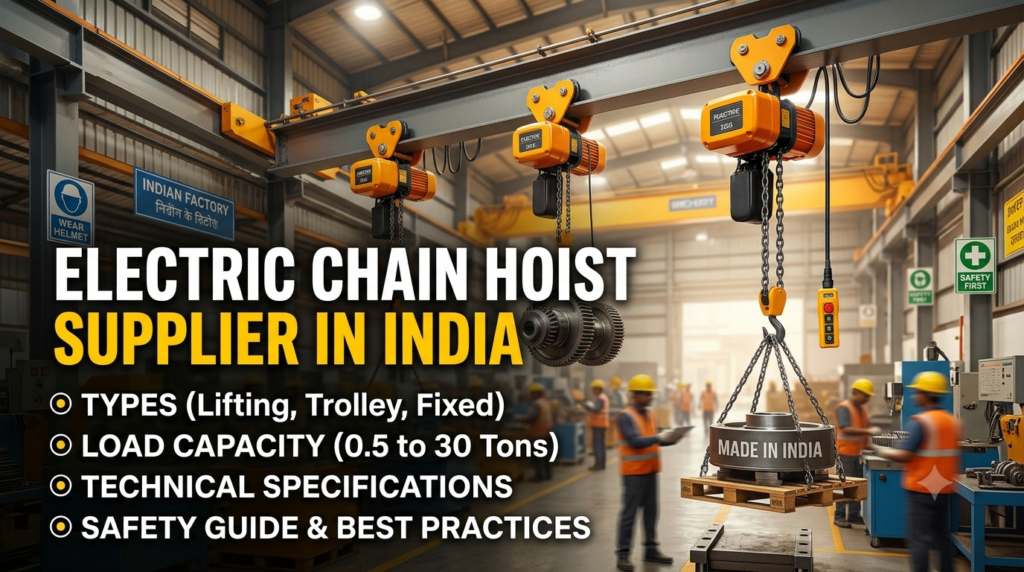
Electric chain hoists are essential material-handling equipment used in manufacturing plants, warehouses, workshops, fabrication units, construction facilities, and industrial production lines. Designed to lift and lower heavy loads with the help of an electric motor and a load chain, these hoists help improve operational efficiency, reduce manual handling, and support safer lifting operations.
Choosing the right Electric Chain Hoist Supplier in India is important for obtaining reliable equipment that meets your lifting capacity, operating frequency, installation requirements, and workplace safety needs. Factors such as safe working load (SWL), lifting height, lifting speed, power supply, duty classification, and safety features should be evaluated before purchasing an electric chain hoist.
SVIBO Industries offers industrial lifting and rigging product solutions for businesses looking for suitable material-handling equipment. Understanding the different types of electric chain hoists, their technical specifications, industrial applications, and maintenance requirements can help buyers make informed purchasing decisions.
In this guide, we explore the key considerations for selecting an electric chain hoist for industrial applications in India.
What Is an Electric Chain Hoist?
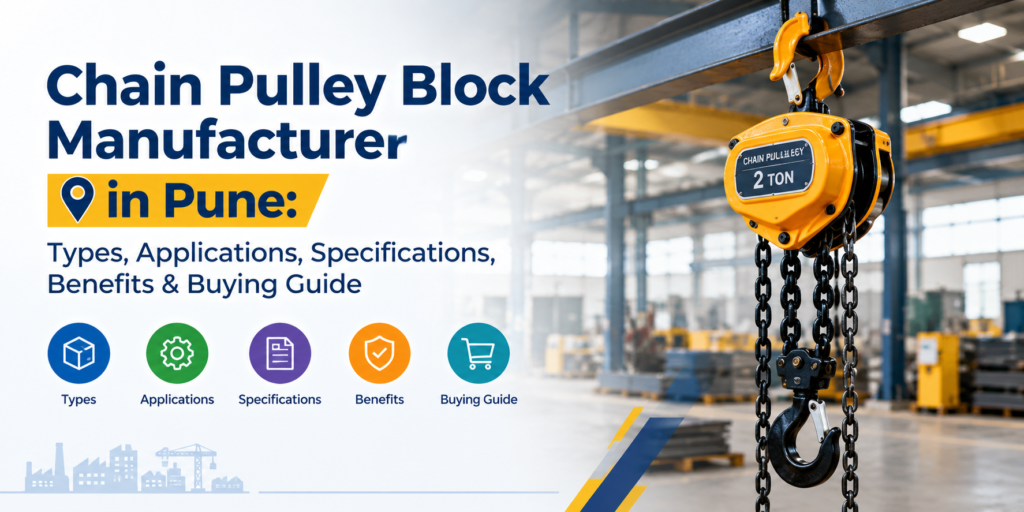
An electric chain hoist is a powered lifting device that uses an electric motor to raise and lower loads through a specially designed load chain. It generally consists of a motor, gearbox, chain wheel, load chain, braking system, hook assembly, and operating controls.
When the operator activates the control pendant or another approved control system, the motor drives the lifting mechanism to move the load vertically. Depending on the configuration, the hoist may be installed on a fixed mounting point or attached to a compatible trolley for horizontal movement along a beam.
Electric chain hoists are commonly used where loads need to be lifted repeatedly, accurately, and efficiently.
Key Benefits of Electric Chain Hoists
- Efficient lifting: Supports repetitive lifting and lowering operations with reduced manual effort.
- Consistent performance: Provides powered operation for routine material-handling tasks.
- Compact design: Suitable for many workshops and production areas with limited installation space.
- Flexible installation: Can be configured for fixed or trolley-mounted applications.
- Improved load control: Enables controlled lifting when the equipment is correctly selected and operated.
- Industrial versatility: Available in different capacities, lifting heights, and operating configurations.
The actual performance and suitability of a hoist depend on its design, installation, maintenance, and operating conditions.
Types of Electric Chain Hoists
A professional electric chain hoist supplier should help buyers select equipment according to load requirements, operating frequency, available space, and lifting conditions.
1. Fixed Electric Chain Hoist
A fixed electric chain hoist is installed at a stationary lifting point. It moves loads vertically without travelling horizontally along a beam.
Applications:
- Machine loading and unloading
- Maintenance workshops
- Assembly stations
- Small manufacturing units
- Dedicated lifting points in production facilities
Fixed hoists are suitable when materials need to be lifted and lowered at a specific location.
2. Trolley-Mounted Electric Chain Hoist
A trolley-mounted electric chain hoist is attached to a compatible trolley that travels along an overhead beam or crane runway. This arrangement allows both vertical lifting and horizontal movement.
Depending on the design, the trolley may be manually pushed or electrically powered.
Applications:
- Manufacturing plants
- Warehouses
- Assembly lines
- Fabrication workshops
- Material transfer between workstations
The beam, trolley, and supporting structure must be compatible with the hoist’s rated capacity and operating requirements.
3. Single-Speed Electric Chain Hoist
A single-speed electric chain hoist operates at one nominal lifting speed. It is commonly considered for applications involving routine lifting and lowering where variable speed is not required.
Advantages:
- Straightforward operation
- Suitable for many repetitive lifting tasks
- Simple speed selection requirements
- Available in a range of industrial configurations
The specified lifting speed should match the application and required level of load control.
4. Dual-Speed Electric Chain Hoist
A dual-speed electric chain hoist offers two lifting speeds, typically a faster speed for general movement and a slower speed for careful positioning.
Advantages:
- Greater flexibility during load positioning
- Better control for selected precision-handling tasks
- Useful for assembly and equipment installation
- Can support operations requiring careful alignment
The suitability of a dual-speed hoist depends on the load, operating frequency, positioning requirements, and available control features.
5. Low-Headroom Electric Chain Hoist
A low-headroom electric chain hoist is designed to reduce the vertical space required between the supporting beam and the lifting hook.
It may be useful in facilities where ceiling height is restricted or maximum hook travel is required within a limited building height.
Common applications:
- Industrial workshops with limited overhead clearance
- Production facilities
- Compact lifting stations
- Applications with restricted hook-height requirements
Buyers should confirm the available headroom, lifting height, beam dimensions, and hook travel before selecting this configuration.
6. Heavy-Duty Electric Chain Hoist
Heavy-duty electric chain hoists are designed for demanding applications when their rated capacity, duty classification, and operating conditions match the intended use.
They may be considered for industrial production lines, fabrication facilities, engineering workshops, and other locations involving frequent lifting.
Selection should account for the load spectrum, number of operating cycles, starts per hour, lifting speed, and environmental conditions rather than capacity alone.
Electric Chain Hoist Load Capacity Guide
Load capacity is one of the most important considerations when purchasing an electric chain hoist. The rated capacity, also called safe working load (SWL) in many lifting applications, indicates the maximum load the equipment is designed and rated to lift under specified conditions.
Common nominal capacity options in the market may include 0.5 tonne, 1 tonne, 2 tonnes, 3 tonnes, 5 tonnes, and higher capacities. Availability varies by manufacturer and model.
| Nominal Capacity | Example of Suitable Applications |
| 0.5 tonne | Light components and small workshop equipment |
| 1 tonne | Routine machine-shop and assembly lifting |
| 2 tonnes | Medium industrial components and material handling |
| 3 tonnes | Selected manufacturing and fabrication operations |
| 5 tonnes | Heavier industrial components and production loads |
| Above 5 tonnes | Specialized applications requiring engineered selection |
These are illustrative application categories, not universal load recommendations. The correct capacity must be established from the actual load and operating conditions.
How to Select the Correct Load Capacity
Before selecting a hoist, consider the following:
1. Maximum load weight: Identify the heaviest load that must be lifted during normal operations.
2. Lifting accessories: Account for the weight of slings, shackles, hooks, lifting beams, and other accessories where applicable to the rated lifting arrangement.
3. Load characteristics: Evaluate whether the load is stable, balanced, and suitable for the proposed lifting method.
4. Lifting frequency: Consider how often the hoist will operate and the expected number of lifting cycles.
5. Operating environment: Account for temperature, dust, moisture, corrosion, and other environmental factors.
6. Supporting structure: Verify that the beam, trolley, crane, mounting point, and building structure can safely accommodate the intended loading.
Never choose a hoist based solely on an approximate load estimate. Do not exceed the equipment’s rated capacity or use an undersized supporting structure.
Technical Specifications of Electric Chain Hoists
When comparing electric chain hoists from different suppliers, review the complete technical specification rather than considering only the price and rated capacity.
| Technical Parameter | Description |
| Rated Capacity | Maximum rated lifting load |
| Lifting Height | Vertical travel available to the load hook |
| Lifting Speed | Speed at which the hoist raises or lowers a load |
| Power Supply | Required voltage, frequency, and phase configuration |
| Motor Rating | Motor power suitable for the specified lifting performance |
| Load Chain | Approved chain specification and configuration |
| Chain Falls | Number of chain parts supporting the load, depending on design |
| Duty Classification | Classification based on expected usage and load spectrum |
| Control System | Pendant, remote, or another approved operating arrangement |
| Trolley Type | Fixed mounting, manual trolley, or powered trolley |
| Braking System | Brake arrangement appropriate to the hoist design |
| Operating Environment | Permitted temperature, dust, moisture, and other conditions |
Technical details vary by model, capacity, manufacturer, and configuration. Always obtain the manufacturer’s datasheet, operating manual, and installation instructions before purchasing or commissioning a hoist.
Why Lifting Height and Speed Matter
Lifting height determines how far a load can travel vertically. A hoist with insufficient lifting height may not meet the requirements of a particular workstation or production line.
Lifting speed affects productivity and load positioning. Faster lifting may be appropriate for routine handling, while slower movement may be useful for delicate positioning or assembly work.
The final selection should balance productivity, precision, duty requirements, and safe operation.
Essential Safety Features of Electric Chain Hoists
Safety features help reduce operational risks when the hoist is correctly selected, installed, inspected, and operated.
1. Overload Protection
An overload protection device, where provided or required, helps prevent lifting beyond the permitted load limit. It must not be treated as permission to lift loads exceeding the hoist’s rated capacity.
2. Braking System
The braking system is designed to control and hold the load according to the equipment’s intended operating requirements. Brake inspection and maintenance should follow the manufacturer’s instructions.
3. Upper and Lower Limit Devices
Limit devices help restrict hook travel within the designated operating range when fitted to the hoist. Operators should understand their purpose and avoid using them as routine stopping controls unless the manufacturer explicitly permits it.
4. Emergency Stop and Operating Controls
Appropriate controls allow operators to start, stop, and direct lifting movements. Emergency-stop provisions should be selected according to the equipment design and applicable safety requirements.
5. Load Chain and Hook Assembly
The load chain, hook, latch where fitted, and related components must be suitable for the rated load and kept in serviceable condition.
Inspect for visible damage, deformation, unusual wear, corrosion, or other defects specified in the manufacturer’s inspection criteria.
6. Electrical Protection
Electrical components, wiring, earthing, control circuits, and protective devices should be appropriate for the power supply and working environment. Installation and electrical maintenance should be performed by qualified personnel.
Quality Standards and Compliance Requirements in India
When purchasing an electric chain hoist, buyers should confirm that the equipment meets the applicable standards, statutory requirements, and manufacturer specifications for the intended application.
Depending on the equipment design and installation, relevant requirements may address:
- Hoist construction and mechanical performance
- Load chain and hook specifications
- Electrical safety and motor protection
- Testing and inspection
- Installation and commissioning
- Safe operating procedures
- Periodic examination and maintenance
The applicability of particular Indian Standards or other recognized standards depends on the equipment type, design, and intended use. Buyers should ask the supplier to identify the standards relevant to the specific model and provide supporting documentation where applicable.
Do not rely on generic claims of certification without checking the certificate, issuing organization, product scope, and validity.
Documentation to Request from the Supplier
Before finalizing an order, consider requesting:
- Technical datasheet and rated capacity details
- Manufacturer’s operating and maintenance manual
- Applicable conformity or inspection documents
- Test records and commissioning documentation, where required
- Installation and mounting instructions
- Warranty details
- Recommended inspection and maintenance schedule
- Information on spare parts and technical support
Complete documentation helps support safe installation, correct operation, and future maintenance.
Industrial Applications of Electric Chain Hoists
Electric chain hoists are widely used across industries that require repetitive vertical lifting.
Manufacturing Plants
Used to lift components, move assemblies, and support material handling around production stations.
Warehouses and Distribution Facilities
Used for selected lifting tasks involving machinery, equipment, and heavy components when installed with suitable supporting systems.
Automotive Industry
Used in workshops and production environments to handle compatible components during maintenance, assembly, and equipment installation.
Fabrication and Engineering Workshops
Used to position metal components and fabricated assemblies during fitting, maintenance, and manufacturing processes.
Construction and Equipment Maintenance
Used for specific lifting activities when the equipment is suitable for the application and installed according to the manufacturer’s requirements. A standard workshop hoist should not automatically be assumed suitable for personnel lifting or unrestricted outdoor construction use.
Industrial Assembly Lines
Used to raise, lower, and position components at designated workstations to support consistent production processes.
Electric Chain Hoist Maintenance and Inspection Guide
Regular inspection and preventive maintenance help preserve equipment reliability and reduce the risk of unexpected failure.
1. Conduct Pre-Use Checks
Before operating the hoist, check the controls, hook, chain, and visible components for obvious damage or abnormal conditions. Confirm that the load path is clear and the equipment appears ready for operation.
2. Inspect the Load Chain
Look for wear, stretching, deformation, corrosion, damaged links, inadequate lubrication where required, and other conditions identified by the manufacturer.
Do not operate the hoist if the chain shows defects that could affect safe operation.
3. Examine the Hook and Latch
Check the hook for deformation, cracks, unusual wear, or damage. Verify the condition and function of the latch where fitted.
Damaged components should be evaluated and replaced according to the manufacturer’s requirements.
4. Check Brakes and Controls
Monitor the hoist for abnormal noises, inconsistent movement, control problems, or signs that the load is not being held correctly.
If any unsafe condition is suspected, stop using the equipment and arrange an inspection by competent personnel.
5. Follow the Manufacturer’s Maintenance Schedule
Maintenance requirements vary according to the model, operating environment, usage intensity, and duty classification. Follow the recommended inspection intervals, lubrication instructions, electrical checks, and replacement criteria.
Repairs and adjustments should be carried out by appropriately qualified or authorized personnel.
Common Mistakes to Avoid When Buying an Electric Chain Hoist
Businesses can improve equipment selection by avoiding these common mistakes:
- Choosing the wrong capacity: Select a hoist according to the actual load and specified operating conditions.
- Ignoring lifting height: Confirm that the available hook travel meets the application requirements.
- Overlooking duty classification: Ensure the hoist is suitable for the expected operating frequency and load spectrum.
- Selecting an incompatible trolley: Verify compatibility with the beam, mounting arrangement, and rated load.
- Ignoring power requirements: Check voltage, frequency, phase, and installation requirements before ordering.
- Overlooking safety features: Confirm that the supplied equipment has the safety provisions required for the application.
- Neglecting maintenance support: Ask about spare parts, inspection procedures, warranty coverage, and service availability.
- Comparing price alone: Evaluate specifications, documentation, build quality, service support, and total ownership costs.
A carefully selected hoist can help businesses avoid unsuitable equipment purchases and improve the efficiency of their lifting operations.
How to Choose the Best Electric Chain Hoist Supplier in India
Selecting a suitable supplier involves evaluating the product and the support available throughout its service life.
1. Check Product Range
Look for a supplier who can offer or source configurations that match the required lifting capacity, lifting height, mounting arrangement, and operating conditions.
2. Review Technical Knowledge
A capable supplier should be able to discuss the intended load, lifting cycle, installation location, beam compatibility, and relevant safety requirements.
3. Verify Product Documentation
Request the manufacturer’s specifications, operating manual, applicable conformity documents, and inspection records where required.
4. Compare Quotations Carefully
Compare equivalent configurations, including the hoist, trolley, controls, chain length, lifting height, accessories, installation scope, and warranty.
5. Evaluate After-Sales Support
Check the availability of replacement parts, maintenance assistance, technical guidance, and warranty support.
6. Consider Long-Term Value
A purchasing decision should account for installation, operating efficiency, maintenance, spare parts, and potential downtime rather than focusing only on the initial price.
Why Consider SVIBO Industries for Industrial Lifting and Rigging Requirements?
SVIBO Industries serves the industrial lifting and rigging sector, where suitable equipment selection, product specifications, and safe handling practices are important considerations.
When evaluating an electric chain hoist for your facility, clearly define the load capacity, lifting height, operating frequency, installation type, and working environment. These details help determine which equipment configuration is appropriate for your application.
Businesses should verify product availability, technical specifications, compliance documentation, warranty conditions, and after-sales support before placing an order.
For buyers searching for an Electric Chain Hoist Supplier in India, a structured evaluation of technical suitability, safety requirements, and service support helps make the purchasing process more informed.
Visit the SVIBO Industries website to explore industrial lifting and rigging products and discuss your material-handling requirements.
Website: https://sviboindustries.in/
Contact: 082088 03755
Conclusion
Electric chain hoists are valuable material-handling solutions for manufacturing plants, warehouses, workshops, fabrication facilities, and industrial maintenance operations. Selecting the right equipment requires careful consideration of rated capacity, lifting height, speed, duty classification, mounting arrangement, power supply, and safety features.
Buyers should also review applicable standards, manufacturer documentation, installation requirements, and maintenance recommendations before making a purchasing decision.
SVIBO Industries encourages businesses to assess their industrial lifting requirements carefully and compare suitable equipment configurations before selecting an electric chain hoist. Prioritizing quality, technical suitability, and safe operation can support reliable material handling and long-term operational efficiency.
Frequently Asked Questions (FAQs)
1. What is an electric chain hoist used for?
An electric chain hoist is used to lift and lower loads using a powered motor and load chain. It is commonly used in manufacturing, warehouses, workshops, fabrication facilities, and industrial maintenance operations.
2. What load capacities are available for electric chain hoists?
Electric chain hoists are available in a range of capacities, from light-duty models to higher-capacity industrial configurations. Common nominal capacities include 0.5 tonne, 1 tonne, 2 tonnes, 3 tonnes, and 5 tonnes, although availability varies by manufacturer.
3. How do I choose the correct electric chain hoist capacity?
Consider the maximum load, lifting accessories, lifting height, operating frequency, duty classification, and installation arrangement. Confirm the final selection against the manufacturer’s rated specifications and the requirements of the application.
4. What is the difference between a fixed and trolley-mounted electric chain hoist?
A fixed electric chain hoist lifts and lowers loads at a stationary location. A trolley-mounted model can also travel horizontally along a compatible beam, allowing loads to move between designated positions.
5. What safety features should an electric chain hoist have?
Depending on the design and applicable requirements, important features may include braking systems, suitable travel limit devices, appropriate overload protection, reliable controls, and correctly specified hook and chain assemblies.
6. What factors affect electric chain hoist prices in India?
Price depends on rated capacity, lifting height, lifting speed, duty classification, motor specifications, trolley configuration, controls, safety features, accessories, and installation requirements.
7. How often should an electric chain hoist be inspected?
Inspection frequency depends on applicable regulations, manufacturer recommendations, operating conditions, and usage intensity. Pre-use checks and scheduled inspections should be performed by appropriately trained or competent personnel.
8. Can an electric chain hoist be used outdoors?
Some models may be suitable for outdoor applications when specifically designed and protected for the environment. Verify weather protection, electrical protection, temperature limits, corrosion resistance, and installation requirements before use.
9. What is the difference between a chain hoist and a wire rope hoist?
A chain hoist lifts loads using a load chain, while a wire rope hoist uses a wire rope wound around a drum. The appropriate option depends on the lifting capacity, height, speed, duty requirements, available space, and application.
10. How can I select a reliable electric chain hoist supplier in India?
Evaluate the supplier’s product range, technical support, manufacturer documentation, quality assurance, applicable compliance information, warranty, spare-parts availability, and after-sales service.
Looking for industrial lifting and rigging solutions? Contact SVIBO Industries to discuss your application requirements and identify suitable equipment for your material-handling operations.