Introduction
Chain slings are among the most reliable and durable lifting solutions used across industries such as construction, manufacturing, mining, shipbuilding, steel plants, and material handling. Designed to handle heavy loads safely and efficiently, chain slings offer superior strength, flexibility, and resistance to harsh working environments.
As a leading Chain Sling Manufacturer in India, SVIBO Industries specializes in producing high-quality chain slings that meet stringent safety standards and industrial requirements. In this guide, we will explore the complete chain sling manufacturing process and understand why quality manufacturing is essential for safe and efficient lifting operations.
What is a Chain Sling?
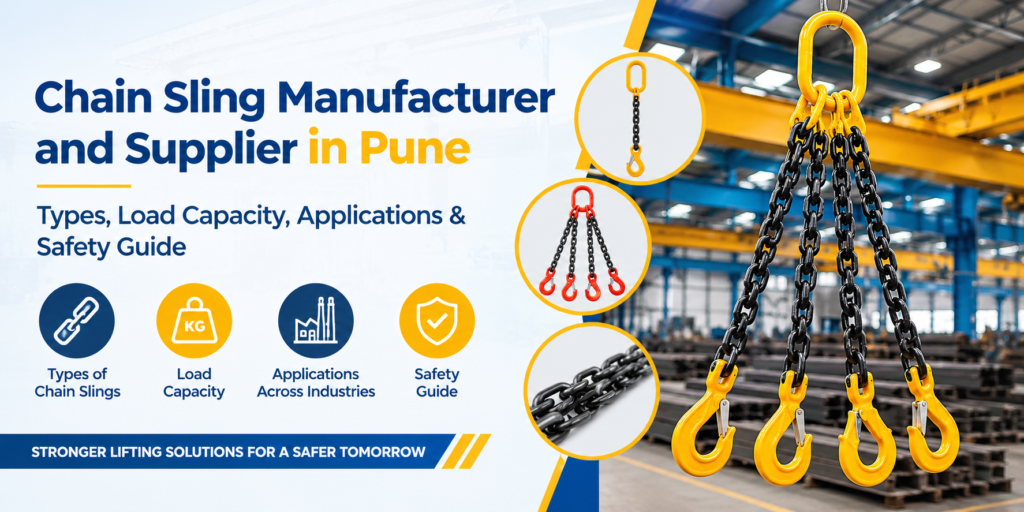
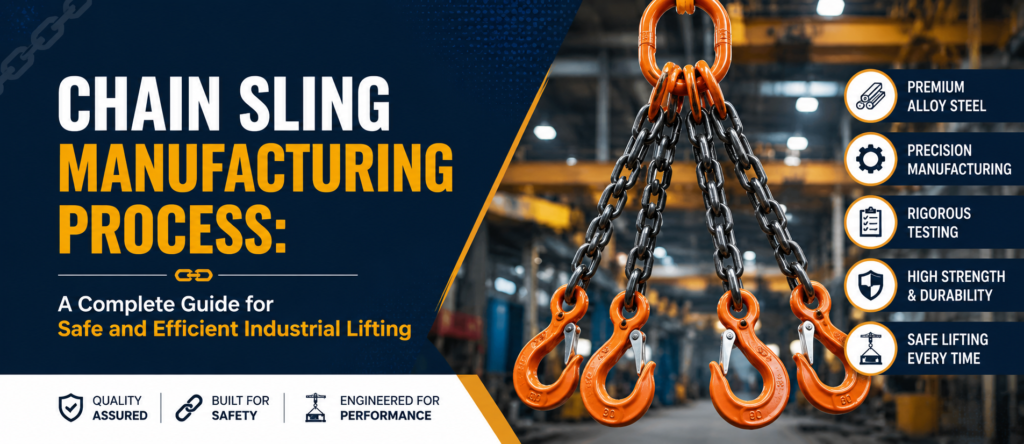
A chain sling is a lifting assembly made from high-strength alloy steel chains combined with fittings such as master links, hooks, connectors, and shortening clutches. These slings are designed to lift, move, and secure heavy loads in industrial environments.
Key Advantages of Chain Slings
- High load-bearing capacity
- Excellent durability
- Resistance to abrasion and heat
- Easy inspection and maintenance
- Suitable for harsh industrial environments
- Long service life
Components of a Chain Sling
A chain sling assembly consists of several critical components:
1. Master Link
The primary connection point between the sling and lifting equipment.
2. Alloy Steel Chain
The main load-bearing component manufactured from Grade 80 or Grade 100 alloy steel.
3. Connecting Links
Used to join chain sections securely.
4. Hooks
Provide attachment points for loads.
5. Shortening Clutches
Allow chain length adjustment when required.
6. Identification Tag
Contains information about load capacity, grade, and inspection details.
Step-by-Step Chain Sling Manufacturing Process
Step 1: Raw Material Selection
The manufacturing process begins with selecting premium-quality alloy steel.
High-grade alloy steel is chosen because of its:
- Superior tensile strength
- High fatigue resistance
- Impact resistance
- Durability under extreme conditions
As a trusted Chain Sling Supplier, SVIBO Industries uses carefully sourced materials to ensure maximum product reliability and safety.
Step 2: Steel Rod Preparation
The selected steel is processed into rods of specific diameters according to sling design requirements.
The rods undergo:
- Cleaning
- Surface treatment
- Dimensional inspection
- Chemical composition verification
This stage ensures consistency throughout the manufacturing process.
Step 3: Chain Link Forming
Specialized chain-making machines bend steel rods into uniform chain links.
Key objectives include:
- Precise dimensions
- Uniform shape
- Consistent material distribution
Accurate chain formation is essential for maintaining load-bearing performance.
Step 4: Welding of Chain Links
Each chain link is welded using advanced automated welding systems.
Importance of Welding Quality
- Ensures structural integrity
- Prevents weak points
- Maintains uniform strength
Every welded joint undergoes rigorous inspection before moving to the next stage.
Step 5: Heat Treatment Process
Heat treatment significantly improves the mechanical properties of the chain.
Heat Treatment Includes:
Hardening
Enhances strength and wear resistance.
Tempering
Improves toughness and reduces brittleness.
Benefits include:
- Increased load capacity
- Better fatigue resistance
- Longer service life
Heat treatment is one of the most critical steps in producing industrial-grade lifting chains.
Step 6: Surface Finishing
After heat treatment, chains undergo surface finishing processes.
These may include:
- Shot blasting
- Cleaning
- Protective coating
- Surface inspection
The objective is to improve corrosion resistance and product appearance while preparing the chain for assembly.
Step 7: Mechanical Testing
Before assembly, individual chain samples undergo extensive testing.
Tests Performed
Proof Load Testing
Verifies the chain can safely withstand designated loads.
Tensile Strength Testing
Measures ultimate breaking strength.
Fatigue Testing
Evaluates performance under repeated loading conditions.
Hardness Testing
Confirms proper heat treatment.
Only chains that pass all tests proceed to assembly.
Step 8: Assembly of Sling Components
The tested chains are assembled with:
- Master links
- Hooks
- Connecting links
- Shortening clutches
- Safety latches
Precision assembly ensures every component functions as a complete lifting solution.
Step 9: Final Load Testing
Each completed chain sling undergoes proof load testing.
This process confirms:
- Load-bearing capacity
- Component integrity
- Safe working load compliance
Testing helps ensure the sling performs safely under actual lifting conditions.
Step 10: Inspection and Certification
Quality control engineers perform detailed inspections.
Inspection Checklist
- Chain dimensions
- Weld quality
- Component compatibility
- Identification markings
- Surface finish
- Load test results
Once approved, the sling receives certification and traceability documentation.
Types of Chain Slings
Single-Leg Chain Sling
Ideal for straight vertical lifting applications.
Two-Leg Chain Sling
Provides improved stability and load distribution.
Three-Leg Chain Sling
Suitable for complex lifting operations.
Four-Leg Chain Sling
Used for lifting heavy and unbalanced loads safely.
Applications of Chain Slings
Chain slings are widely used in:
Construction Industry
- Steel structure lifting
- Heavy equipment handling
Manufacturing Plants
- Machinery movement
- Production line operations
Steel Plants
- Handling steel coils
- Lifting heavy metal components
Mining Industry
- Equipment maintenance
- Material transportation
Shipbuilding and Ports
- Cargo handling
- Marine lifting operations
Why Quality Manufacturing Matters
Poor-quality chain slings can lead to:
- Load failure
- Equipment damage
- Workplace accidents
- Costly downtime
Choosing an experienced Chain Sling Manufacturer in India ensures compliance with safety standards and reliable lifting performance.
Why Choose SVIBO Industries?
SVIBO Industries is a trusted Chain Sling Manufacturer in India and reliable Chain Sling Supplier serving industries across the country.
Our Strengths
✔ High-quality alloy steel chain slings
✔ Strict quality control procedures
✔ Custom lifting solutions
✔ Compliance with international safety standards
✔ Advanced manufacturing facilities
✔ Competitive pricing
✔ Timely delivery and technical support
Our commitment to quality and safety makes us the preferred choice for industrial lifting equipment.
Conclusion
The chain sling manufacturing process involves precision engineering, advanced material selection, rigorous testing, and strict quality control measures. Every stage plays a vital role in ensuring safe and efficient lifting operations.
By partnering with a reliable Chain Sling Manufacturer in India like SVIBO Industries, businesses can ensure maximum safety, operational efficiency, and long-term performance for their lifting requirements.
Frequently Asked Questions (FAQs)
1. What is the lifespan of a chain sling?
With proper maintenance and regular inspection, a chain sling can provide many years of reliable service.
2. Which grade is commonly used for chain slings?
Grade 80 and Grade 100 alloy steel chains are widely used for industrial lifting applications.
3. How often should chain slings be inspected?
Visual inspections should be performed before every use, with periodic detailed inspections conducted according to industry standards.
4. Can chain slings be customized?
Yes, chain slings can be customized in terms of length, number of legs, hooks, and fittings to suit specific lifting requirements.
5. Why choose alloy steel chain slings?
Alloy steel chain slings offer superior strength, durability, heat resistance, and flexibility compared to many other lifting solutions.